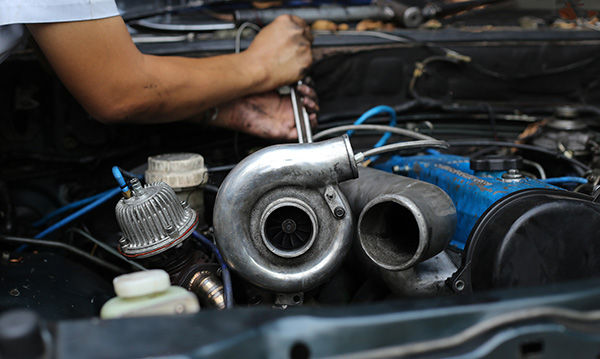
Turbocharged engines can make smaller engines feel stronger, quicker, and more responsive. That extra power comes from heat, pressure, and fast-moving parts working in a very tight space. When oil control starts slipping, the engine may keep driving normally for a while, but damage can build quietly.
Oil burning is one of the problems that turbo engines do not handle well. It can start with a faint smell, light smoke, or an oil level dropping between services. If it continues, the turbocharger, catalytic converter, spark plugs, sensors, and internal engine parts can all suffer.
Why Turbocharged Engines Burn Oil
A turbocharged engine depends on oil for lubrication and cooling. The turbocharger spins at extremely high speeds, and oil flows through it to protect the bearings and control heat. If oil gets past seals, sits too long in hot areas, or breaks down from age and heat, it can burn inside the engine or exhaust system.
Some oil burning happens because of engine wear. Piston rings, valve seals, PCV parts, and turbo seals can all allow oil to enter places it should not. The tricky part is that oil burning does not always leave a puddle. The oil may be consumed inside the engine or sent through the exhaust, which makes the problem easier to miss.
Turbo Oil Seal Wear And Blue Exhaust Smoke
Turbochargers have seals that help keep oil inside the bearing housing. When those seals wear, or pressure inside the system is wrong, oil can leak into the intake or exhaust side of the turbo. Once oil reaches the hot exhaust parts, it can burn, producing blue or gray smoke.
Smoke may show up during acceleration, after idling, or when the engine is started after sitting. In some cases, the smoke is light enough that the driver barely notices it. A burning oil smell, oily residue in charge pipes, or oil collecting near the intercooler can also point toward turbo seal trouble.
Low Oil Level From Burning Oil
A dropping oil level is one of the most important warning signs. Turbocharged engines require the correct oil level because both the turbo and the engine depend on steady lubrication. If the level gets low, the turbo bearings can run hotter and wear faster.
Drivers sometimes assume the oil is fine because there are no spots under the vehicle. That can be misleading. If the engine is burning oil, the level can drop without leaving anything on the driveway. Checking the dipstick between oil changes is especially useful on turbocharged vehicles with higher mileage.
Clogged PCV System And Crankcase Pressure
The PCV system helps manage pressure inside the engine. When it clogs, sticks, or fails, pressure can build in the crankcase. That pressure can push oil past seals and gaskets or pull oil vapor into the intake, where it gets burned.
PCV problems can create rough idle, oil leaks, increased oil consumption, smoke, or a whistling sound from the engine area. Because the PCV system is connected to airflow and crankcase pressure, it can make oil burning look like a turbo problem even when the turbo is not the original cause. That is why testing the whole system matters.
High Heat And Old Oil Damage Turbo Parts
Turbochargers live in a high-heat environment. Old, dirty, low-grade, or the wrong type of oil can break down faster at that heat. Once oil loses its ability to protect and cool, the turbo bearings and seals can suffer.
Delayed oil changes are especially hard on turbocharged engines. Sludge and deposits can restrict oil flow through small passages. That can starve the turbo of lubrication and raise temperatures. Regular maintenance with the correct oil is one of the simplest ways to protect a turbo engine from avoidable wear.
Oil Burning Symptoms Drivers Should Watch
Oil burning can show up in a few different ways. Some symptoms are obvious, while others are easy to overlook during daily driving.
- Blue or gray exhaust smoke
- Burning oil smell after driving
- Oil level dropping between services
- Rough idle or misfire
- Oily residue in intake piping
- Check engine light
- Poor acceleration or weak boost
None of these signs should be ignored on a turbocharged engine. The sooner the cause is found, the better chance there is of protecting the turbocharger and exhaust system from added damage.
Why Turbo Engine Oil Burning Needs Testing
Oil burning can come from several places, so replacing the turbo without testing can be an expensive mistake. Worn piston rings, valve stem seals, PCV faults, oil leaks, turbo seal wear, clogged oil passages, or poor maintenance history can all be involved. Sometimes more than one issue is present.
A proper inspection may include checking oil level, looking for intake oil residue, testing crankcase pressure, scanning for codes, inspecting the turbo, checking compression, and reviewing service history. The goal is to find out where the oil is going and why. That is the only way to stop the damage, instead of chasing smoke and smells.
Get Turbocharged Engine Repair In Virginia Beach, VA, With Napa BP
If your turbocharged engine is burning oil, smoking, losing oil between services, or showing signs of weak boost, Napa BP in Virginia Beach, VA, can check the turbo, PCV system, engine condition, and oil-related components.
For turbo engine testing and repair before oil burning causes more damage, contact us to schedule an appointment.