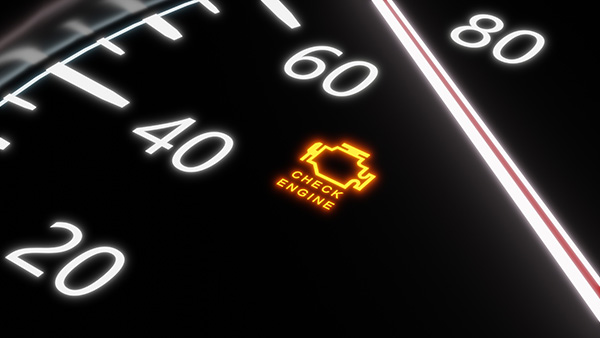
Most people want the check engine light gone for one simple reason: they want their car to be okay. The tricky part is that the light doesn’t exist to annoy you, it exists because the engine computer noticed something outside normal limits. Sometimes it’s minor. Sometimes it’s a warning you caught early. The fastest way to make the light disappear is to clear it with a scan tool, but the right way is to fix the cause.
Here’s how to approach it so you actually solve the problem instead of playing whack-a-mole with a warning light.
Step One Is Knowing If It’s Urgent Or Not
Before anything else, pay attention to how the light is behaving. A steady check engine light means the car saw a fault, but it may still be safe to drive short distances. A flashing check engine light is different. Flashing often indicates an active misfire, which can damage the catalytic converter if you keep driving it under load.
Also, take note of how the car feels. If it’s running rough, down on power, or shaking at idle, move it up the priority list. If it drives normally and the light is steady, you usually have time to schedule service without panic, but you still don’t want to ignore it for weeks.
What Actually Turns The Light Off
There are three basic ways the light turns off:
- The fault condition is corrected, and the vehicle completes enough drive cycles that the computer decides the issue is gone.
- A scan tool clears the codes manually.
- Power is disconnected long enough to clear stored codes, which also wipes other learned data.
Only the first one is a true fix. Clearing codes can make the light disappear, but it doesn’t solve the problem. In many cases, the light will come right back once the system runs its self-check again.
The Most Common “Easy” Causes That Still Need Attention
Some causes are simple, but they still deserve a proper look.
A loose or faulty gas cap is a common one. If the EVAP system detects a leak, it can set a code. Tightening the cap may solve it, but it won’t always clear the light immediately. The car has to run its leak check again and pass. Another simple cause is a battery voltage event. A weak battery or charging issue can cause odd sensor readings and warnings, then things look normal again once the voltage stabilizes.
Even when the cause is simple, confirming the code matters. You don’t want to assume it was a cap when the code was pointing toward a misfire or a mixture issue.
Why A Code Reader Can Lead You In The Wrong Direction
Basic code readers are useful, but they often create false confidence. A code describes what the computer noticed, not what part needs to be replaced. Lean code can result from an air leak, a fuel delivery issue, an exhaust leak, or a sensor signal problem. A misfire code can result from ignition, fuel, or air leaks, or mechanical engine issues.
This is where targeted engine diagnostics earn their keep. The goal is to test and confirm the cause using data and verification checks, not to guess based on a code description.
Owner Mistakes That Keep The Light Coming Back
One mistake is clearing the light immediately. That wipes freeze frame data, which is the snapshot of engine conditions when the fault occurred. Another mistake is replacing parts in a chain without proving the cause. We see this a lot with oxygen sensors, mass airflow sensors, and ignition components.
Another common mistake is ignoring the pattern. If the light comes on right after fueling, that points you toward EVAP concerns. If it comes on during acceleration, that leans toward misfires, air metering, or fuel delivery. If it shows up at idle, air leaks and idle control issues become more likely. The pattern is not trivia, it’s a shortcut to the truth.
A Practical Plan To Make The Light Go Away For Real
If you want the light gone and you want confidence the car is healthy, here’s a solid approach:
- Write down when it happened and how the car felt at the moment
- Avoid clearing codes until the problem has been checked
- Have the codes read and the stored data reviewed
- Test the system involved and confirm the cause
- Fix the root issue, then verify it stays resolved
Once repairs are made, the light may turn off on its own after the system runs and passes its checks. In other cases, the light can be cleared after repairs and then confirmed with a road test and monitor readiness.
What To Do If The Light Turns Off Before You Get It Checked
If the light turns off by itself, don’t assume you’re in the clear. Many faults are stored as pending or history codes, and they can still be pulled even when the light is off. That’s often the best time to check it, because you can catch the clue without the stress of an active warning.
If it was flashing at any point, mention that. A flashing event deserves attention even if the light later goes out.
Get Check Engine Light Help In Virginia Beach, VA, With Napa BP
If you want the check engine light handled the right way, we can run engine diagnostics, review the stored code information, test the system involved, and confirm what’s actually causing the warning. We’ll explain what we find clearly and recommend the fix that makes sense for your car, not a guess based on a generic code description.
Book your service at Napa BP in Virginia Beach, VA, and we’ll help you get rid of the light by addressing the real cause.