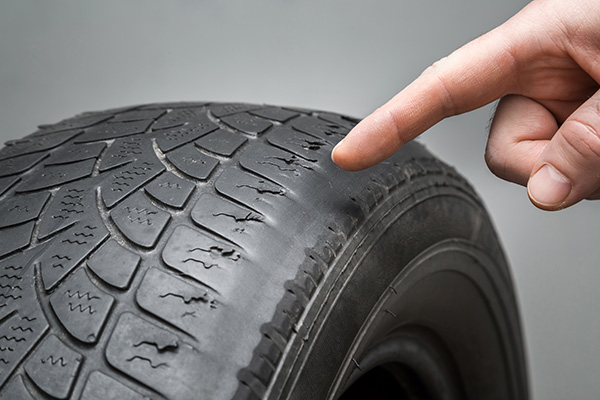
A tire that wears out faster on one side is telling you something about how the wheel is sitting on the road. The outer edge may look smooth while the inner tread still appears usable, or the inside shoulder may be nearly bald where it is hard to see. Drivers sometimes replace the tire and move on, only to find the same wear pattern returning a few months later.
Uneven tire wear is rarely just a tire problem. Alignment angles, suspension condition, tire pressure, driving habits, and worn steering parts can all change how the tread contacts the pavement. Finding the cause matters because a new tire will wear the same way if the underlying problem stays in place.
Wheel Alignment Is One Of The Most Common Causes
Wheel alignment controls the direction and angle at which each tire meets the road. If one wheel points slightly inward or outward, the tire can scrub across the pavement instead of rolling straight. That condition is known as incorrect toe, and it can wear one edge faster while also creating a feathered texture across the tread.
Camber also affects side wear. Camber describes how much the top of the wheel leans inward or outward. Too much inward lean can wear the inner shoulder, while too much outward lean can wear the outer edge. A small alignment change may not make the car pull noticeably, but it can still remove tread every time the vehicle moves.
Worn Suspension Parts Can Knock The Alignment Out
An alignment setting is only useful if the suspension can hold the wheel in the correct position. Worn control arm bushings, ball joints, tie rods, struts, shocks, or wheel bearings can allow the wheel to shift while driving. The alignment may look acceptable while the vehicle is stationary, then change under braking, cornering, or acceleration.
That is why an alignment should not begin and end with adjusting numbers on a screen. The suspension and steering parts should be inspected first. If a joint is loose or a bushing has collapsed, the vehicle may need repair before the alignment can stay accurate.
Low Or High Tire Pressure Changes The Wear Pattern
Tire pressure affects how the tread sits against the road. An underinflated tire flexes more and places extra load on the shoulders. Both outer edges can wear faster, although one side may look worse if an alignment or suspension problem is present at the same time.
Overinflation creates a different pattern by placing more load near the center of the tread. Pressure alone usually does not cause wear to occur only on the inner or outer edge, but it can exaggerate an existing problem. Checking pressure with the tires cold and using the vehicle manufacturer’s recommendation helps keep the contact patch where it belongs.
Hard Cornering Can Wear The Outer Shoulders
Driving style affects tire wear more than many people realize. Fast cornering shifts vehicle weight toward the outer tires and heavily loads the outside shoulders. Drivers who take ramps, curves, and tight turns aggressively may notice faster wear along the outer edge, even when the alignment is close to specification.
Virginia Beach traffic can also involve frequent turning, braking, and parking maneuvers. None of those actions ruin tires by themselves, but they add up. If the wear is similar on both front tires and mostly affects the outer shoulders, the driving pattern may be part of the explanation alongside pressure and alignment.
A Bent Wheel Or Damaged Suspension Part Can Cause Uneven Wear
Potholes, curbs, and road debris can bend wheels or suspension parts without causing an immediate breakdown. A slightly bent control arm, strut, knuckle, or wheel can change alignment enough to wear one side of the tire. The driver may notice a pull, steering wheel vibration, or a wheel that no longer sits quite the same as the others.
Some damage is easy to see, while other problems only show up during measurements. If the alignment cannot be adjusted to meet specification, a bent or shifted component may be the cause. Replacing tires without checking for impact damage can cause the same wear pattern to return.
Failure To Rotate Tires Makes The Difference More Obvious
Front and rear tires do not wear at the same rate. Front tires handle steering and carry extra load during braking, so their shoulders often wear faster. If the tires are never rotated, the difference between positions becomes more pronounced.
Rotation cannot fix poor alignment or loose suspension components, but it can distribute normal wear more evenly. Regular maintenance should include tire rotation when appropriate for the vehicle and tire design. Directional tires, staggered wheel sizes, and some performance setups require specific rotation patterns or may not allow front-to-rear rotation at all.
How The Wear Pattern Helps Identify The Problem
A tire worn on the inner edge often points toward excessive negative camber, incorrect toe, worn suspension parts, or a combination of those issues. Outer-edge wear can be caused by positive camber, underinflation, hard cornering, or alignment issues. Feathering across the tread commonly points toward incorrect toe.
Cupping or scalloped dips are different from clean edge wear. They can come from worn shocks or struts, poor balance, loose suspension parts, or tire defects. Looking at the full tread pattern, rather than only the thinnest spot, gives a better picture of what the vehicle is doing on the road.
Why Uneven Tire Wear Should Be Checked Early
A tire with one bald edge may have far less usable grip than it appears to have from the outside. Inner-edge wear is especially easy to miss because the worst section faces under the vehicle. In wet weather, that worn section has reduced ability to move water away, which can reduce braking performance and increase the risk of hydroplaning.
Uneven wear also costs more over time. Replacing tires early becomes expensive, and the vehicle may continue to handle poorly until the cause is corrected. An inspection of tire pressure, tread pattern, alignment, steering, and suspension can help protect the next set of tires.
Get Uneven Tire Wear And Alignment Service In Virginia Beach, VA, With Napa BP
If one side of your tires is wearing faster than the other, Napa BP in Virginia Beach, VA, can inspect the tread pattern, suspension, steering, tire pressure, and wheel alignment to find the cause. Correcting the underlying problem can help the tires last longer and improve how the vehicle handles.
Contact us to schedule an appointment.