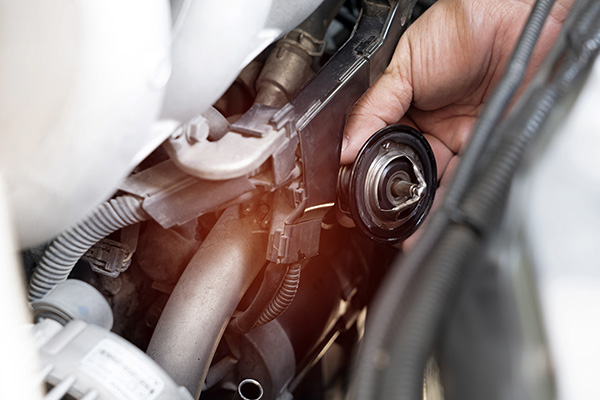
The thermostat is a small cooling-system part, but when it stops working correctly, the symptoms can affect engine temperature, cabin heat, fuel economy, and even the engine's life. A thermostat stuck open creates very different problems than one stuck closed.
Watching the temperature gauge gives you useful clues, but it doesn't prove the thermostat is bad. Coolant level, water pump operation, radiator condition, cooling fans, and temperature sensors can create similar symptoms. A cooling-system diagnostic is the best way to confirm what is actually happening.
A Stuck-Open Thermostat Keeps the Engine Too Cool
The thermostat should stay closed while the engine warms up, then gradually open once the coolant reaches operating temperature. If it sticks open, coolant circulates through the radiator too soon.
You may notice that the temperature gauge takes much longer than normal to reach its usual position. In colder weather, it may stay noticeably low for the entire drive. The engine can still run, but it spends too much time below the temperature it was designed to operate at.
Weak Cabin Heat Is Another Common Clue
Your heater depends on hot engine coolant flowing through the heater core. When a thermostat stays open and the engine never warms properly, the air coming from the vents can stay lukewarm.
Drivers sometimes assume the heater core or climate-control system has failed. If the temperature gauge also stays low, however, we start looking closely at engine operating temperature. A thermostat problem can affect both the heater and engine at the same time because they depend on the same coolant reaching the proper temperature.
A Stuck-Closed Thermostat Can Cause Rapid Overheating
A thermostat stuck closed creates the opposite problem. Coolant cannot circulate properly from the engine to the radiator, so heat becomes trapped inside the engine.
The temperature gauge can climb quickly, sometimes within a short drive. You may also see an overheating warning, smell hot coolant, or notice coolant pushing out of the reservoir. If the gauge reaches the hot zone, shut the engine off as soon as you can stop safely. Continuing to drive can damage the head gasket, cylinder head, and other engine components.
Radiator Hose Temperatures Can Tell Us Something
During an inspection, hose temperature can provide another clue. If the engine is hot but the radiator and upper hose remain much cooler than expected, coolant may not be moving through the thermostat correctly.
We don't rely on hose temperature alone because trapped air, a weak water pump, a restricted radiator, or incorrect sensor readings can skew the picture. A technician can compare scan-tool temperature data with actual cooling-system temperatures and watch how they change as the engine warms up. That gives us much better information than simply replacing the thermostat because the gauge looks unusual.
A Fault Code Can Point Toward Slow Warm-Up
Modern vehicles monitor how quickly the engine reaches its expected operating temperature. If the engine consistently warms too slowly, the computer can store a thermostat-related fault code and turn on the check engine light.
One common situation is an engine that drives normally but never quite reaches full temperature during cooler weather. The driver may only notice reduced heater performance or slightly worse fuel economy. The computer, however, sees that coolant temperature remains below its expected range. A diagnostic can determine whether the thermostat is responsible or whether a temperature sensor is reporting inaccurate information.
Do Not Overlook Low Coolant or Air in the System
Low coolant can create misleading thermostat symptoms. If the cooling system is not full, the temperature sensor may not stay surrounded by coolant, the heater can stop producing consistent heat, and engine temperature can fluctuate.
Air pockets can cause similar behavior after cooling-system work if the system was not filled and bled correctly. Before replacing a thermostat, we check the coolant level, pressure-test for leaks when needed, and verify the system is circulating properly. Finding a leak first matters because installing a new thermostat won't fix coolant loss elsewhere.
Thermostat Problems Should Be Confirmed Before Parts Are Replaced
A thermostat isn't a complicated component, but accurate testing still saves time and money. An overheating engine could have a failed fan, weak water pump, restricted radiator, coolant leak, or combustion gases entering the cooling system. An engine that stays too cool could also have a faulty coolant temperature sensor.
At our shop, we look at how quickly the engine warms up, actual coolant temperature, heater performance, coolant circulation, and stored fault information. Regular maintenance also gives us a chance to catch coolant leaks and aging cooling-system parts before a thermostat-related symptom becomes an overheating problem.
Get Thermostat and Cooling System Service In Virginia Beach, VA, With Napa BP
If your temperature gauge stays unusually low, your heater barely gets warm, or the engine begins overheating, Napa BP in Virginia Beach, VA, can perform a cooling-system diagnostic and determine whether the thermostat is stuck open, stuck closed, or another component is causing the problem.
Schedule a cooling-system diagnostic before an incorrect engine temperature turns into poor heater performance or serious overheating damage.